Saturday, 24 June 2017

Coaches Win Matches!


Cricket is always referred to as the game of the gentlemen.  Last week this long time belief has taken one more body blow! Gentleman coach Kumble is made to quit.  Players have become more important and captain Kohli is proved supreme. It is even being argued..........unlike football, cricket does not require a strong coach!  But our beliefs and history speak otherwise.  Let us examine past cases one by one.


Yes, Ram's story is Ramayan.  But could he have conquered Ravan alone?  Clever Ram accepted Vibhishan as his friend, philosopher and guide.

In the war against Ravan, Vibhishan divulged all secrets of Ravan's army and helped Ram in devising the right strategy.  Ram faithfully followed Vibhishan and went on from strength to strength.

During the climax, when Ram was puzzled in his final war with Ravan, it was Vibhishan who advised Ram to first destroy the 'amrut kalash' inside Ravan's chest in order to kill him.  And Ram did exactly the same to become victorious.
Rightfully Ram recognized the services of Vibhishan and anointed him as the King of Lanka!
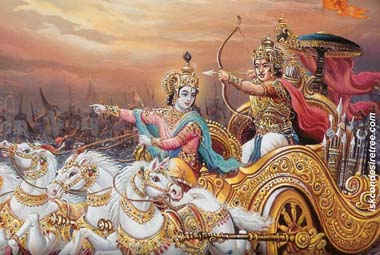
             
Arjun chose Krishna instead of  several battalions of  army. At the beginning of the war when Arjun was down and out with sunk morale, it was Krishna, the master coach who reminded him the duties of a warrior by narrating the 'Bhagavad geeta'.  

Whether it was neutralizing Bhishma, Drona or Karna, Krishna's strategies came in very handy for Arjuna in delivering the winning blows.  'Saama, dhana, bedha, danda'........now famous as the 'chathuropayas' is the brain-child of Krishna, tested and proved during the Mahabharat war. Exactly for this reason krishna is hailed as the hero of Mahabharat, although he was only a non-playing coach throughout.


Chanakya, the legendary coach was the 'guru' who identified and inspired Chandragupta to establish the Maurya dynasty which produced the noted successor, Ashoka, the great! 'Chanakya Neeti' became the master strategy for all rulers to come over the centuries. Chanakya's 'Artha shashtra' has become the basis for all successful economies which have transformed the world!


The present Shah-Modi combination is reminiscent of Chanakya-Chandradupta days.  In the recent past we have seen this 'duo' delivering several master strokes in order to lift our country and their party to greater heights.


                                                                                                                                                                  Let us come to the field of education and training.  Indian Army has earned for itself a different type
                                                                                         
glory by taking up the cause of teaching and coaching. Towards the greater cause of national integration they have taken up coaching IIT aspirants from Kashmir.  Nine Kashmiri youth have made it to the entrance of IIT this year. It is heartening to see our Army Chief talking to qualified Kashmiri girls who have marched ahead of boys.

What is common between Microsoft CEO Mr. Satya Nadella, Nokia CEO Mr.Rajiv Suri, Super Chef Mr.Vikas Khanna and India's first woman surfer Ms.Ishita Malaviya? They were all coached by our beloved 'Manipal' during their budding stages!

Let us turn to the world of sports.

Reigning Football champion Germany (2014) owes its trophy to its present coach Joechim Loew.  Since 2014, five major players have retired including the Captain.  But the coach continues and he is in the task of rebuilding the side with budding youngsters.  Loew is confident of defending the title.

Tennis clay court king Nadal with 15 grand slam titles dedicates his success to his uncle and coach Toni Nadal. Nadal says that his coach is very tough on him since childhood and occasionally puts too much of pressure. Toni does so because he wants Nadal to succeed.

Badminton coach Gopichand's role as a coach in shaping Saina Nehwal, Sindhu and even Kidambai Srikkanth is too well known.  India's achievement in Badminton has gone less noticed when compared to cricket.  Gopi and his pupils deserve highest credit as their game happens to be very tough with fierce competitors like China.

What is common between these three pairs?  They are all Cricket World Cup winners!

Former legend Bob Simpson, took over as coach (1986) when Australian cricket was in doldrums. He forged a great alliance with his pupil Allan Border to make his team a world beater again in all formats.  Simpson as a coach ruled Australian Cricket for almost a decade.

Lesser known cricketer John Buchanan (Coach 1999-2007) took Australian cricket to greater heights in combination with Ricky Ponting.  They together won two consecutive world cups and conquered all countries in their own backyards.

South African legend Gary Kirsten proved to be a seasoned campaigner and combined well with our 'captain cool' Dhoni.  They together won a world cup besides taking India to the top of test cricket for quite a long period.  Earlier John Wright and Saurav Ganguly too worked together well while bring great laurels to Indian Cricket.

Today while Indian Cricket is still at top of the world, the turn of events during last week has seen dumping of its gentleman coach Kumble for wrong reasons.  Probably these are the most disgraceful days for Indian cricket.

During 2016, when former all-rounder  Ravi Shashtri was its director-coach, there was no reason to remove him at all.  Ganguly's personal equation with Shashtri was not okay which lead to dumping of Shashtri, bringing disgrace to Indian cricket.

Surprise choice was India's legendary bowler Anil Kumble.  Never before such an Indian cricketing giant was chosen for the role. An humble student of the game for more than 3 decades, Kumble took up the task with great interest and enthusiasm and achieved a formidable record during last one year with young Virat Kohli.

Last one week's development is the result of the 'cold war' between the 'two' going on since more than six months. Gentleman Kumble has quit and Captain Kohli has made his writ run on the game.  We can very well imagine what might have happened in the dressing room.  We all know Kumble too well who has played his game with world-class distinction under various captains and coaches for nearly two decades for the country. Whether it was the pain of broken jaws, operated knees or unceremonious drops, Kumble has played the game with dedication and humility.  What is wrong if 
he expects similar commitment from his players as a coach? Is any player including Kohli larger than the game? Some fame, name and money has rushed to the head of present day players and they feel offended when somebody speaks to them about discipline and commitment!

Kumble can be a tough man too when it comes to upholding the honor of his team and his players.  Remember how he handled the 'monkey gate' issue as a captain in Australia during 2007?

One bone of contention said to be between captain Kohli and Kumble is the selection of the final eleven. If an experienced coach like Kumble does not have a say, why there should be a coach at all?
During the recent tour of Australian team, Kumble was for including the left arm chinaman bowler Kuldip Yadav for the Ranchi test (series was level at 1-1) itself.  Kohli opposed and Kuldip could not play.  When Kohli had to sit out of the final test at Dharmashala, Kumble prevailed upon the acting captain Ajinkya Rahane and included Kuldip.  Kumble was proved right bang on as Kuldip destroyed first innings of the touring team with a 4-wicket haul paving way for test and series victory.  If Kohli is not happy with Kumble for this event, tell me who is to be kicked out of the team?

Many times I think that professional cricket managers like Srinivasan (may be there are charges against him)  could have managed this situation in a better manner.  The Supreme Court appointed committee of administrators having no cricketing background too are adding to the confusion.  What if Kumble has asked for better packages for himself and his supporting team? Why they did not stand up to the support of the great cricketer in order to uphold the dignity of the game?

Last but not the least it was painful to note that yesterday Kohli has deleted the 'welcome tweet' he made one year ago for Kumble as new coach.  There can't be a more childish act than this.

With this type of treatment to the illustrious coach Kumble, will the next incumbent dare to discipline the captain and his heavy weights? Will any former player worth some name and honor dare to take up the job itself? Its time people who matter should sit and think over. Let everybody know that players come and go, but the game continues for ever!

                                                    -0-0-0-0-0-0-0-0-0-0-0-0-0-0-0-0-0-

Thank you for reading my blog.  Please upload your valuable feedback right below.  You can also send your feedback to 'klakshminarayana1956@rediffmail.com.   You can also reach me on facebook at 'lakshminarayana krishnappa'.


Saturday, 10 June 2017

Learn Handwriting Analysis in One hour!

       Handwriting Analysis      
(Graphology)  


Do you know Handwriting Analysis (also called Graphology)?

Your answer may be ‘NO’!....................but my answer (on your behalf)  is ‘YES’!!  Make a small beginning by taking the following test.

Whom will you appoint as your Personal Secretary?

                                                                                     
                                                           (Sample Handwriting A)
                                                           (Sample Handwriting B)

If your answer is ‘Sample Handwriting A’, it is obvious that you know Handwriting Analysis!........Great!! Go on reading and this article for you!!!

Your handwriting is not your handwriting!
Your handwriting is unique.  In fact your handwriting is not your handwritng!................Surprised?
……………..Because it is your ‘brainwriting’!!  Whether you write with your hand, feet or mouth, it

is all the same, because it is the brain that writes.  Thus when you write you leave your brain print on the paper.

Therefore your handwriting can be a way to understand your personality.  Your conscious mind determines WHAT you write and your subconscious mind controls HOW you write and  generally you have no control on your subconscious mind!  Your personality characteristics can be analysed by size, pressure, speed, spacing, slant and over seven hundred features of your handwriting.

History of Graphology:
Chinese were the earliest to study handwrirting analysis. An Italian Physician called Camillo Baldi (Circa 1600 AD) can be called the ‘father of Graphology’.  During Circa 1800, Gemans took the lead in study of  the subject.  In the recent past a systematic study of English handwriting is done by Erika Karohs, a British national.

How it is used?
Graphology is extensively made use off in the following ways.
Personality Analysis: Graphology is a way to understand yourselves and also personalities around you.  This science is used by modern managements to know about their executives/employees in order to make efficient and useful ‘work allocation’.
Child Monitoring: As responsible parents you are all concerned with the wholesome development of ‘personality’ of your children. Handwriting analysis can be the useful tool!  In fact you will be surprised to know that you can achieve better ‘personality development’ of your children by mending their handwritings in the desired way.
Graphotherapy: By practising the desired ‘handwriting styles’, it is even possible to improve your/your children's  ‘personality and behaviour’ too! Thus handwriting analysis can also be an effective tool in  improving your  ‘personality’ also and this science is called ‘Graphotherapy’.
Criminal Investigation: Handwriting analysis can be effectively used in identifying criminals and forgery cases.

Handwriting Analysis Techniques:
Emotional Depth:
 Read the following samples.  It reveals about the ‘emotional depth’ of the man’s  writing!   
                                      

Obviously those who exert high pressure on paper while writing are highly ‘emotional’ and those who exert low pressure on paper are less emotional by nature.

 Heart or Head?:

A careful reading reveals that those who write with ‘right slant’ are friendly, kind and generous and those who right with ‘left slant’ are not so friendly, kind and generous.  But there are people with ‘mixed up slants’ and often these people are in a ‘confused’ state of mind and are likely to be indecisive.

Philosophical or Physical?
Observe below the three ‘zones’ of writing and the baseline.  It reveals a lot!


Those who write with well formed upper zone parts as below are philosophical and religious. Further they have good imagination and ideas.


Those who write with well formed middle zone parts as below lead a happy daily life and they try to live in the present.
            
                
Those who write with well formed lower zone parts as below have good health and physical abilities.


Observe the baseline of the sample below. This base line is highly consistent and straight. 
Such people are methodical and consistent.

Dominant Character:

                                             
Those who write with big font size obviously are commanding and dominating.

Ambition & Optimism:

                                      
Those who write with ascending base line as seen above are generally ambitious and optimistic

 whereas those who write with falling base line as above are depressed and  are low in life goals.
                                           

Well balanced and Sytematic:


Look at the sample above.  All round the paper you can observe even sized and fair margins.  Obviously such people are well balanced and systematic in life too.

Print Type of writing:

                                                                  
Those with print type of writing as above are not friendly.  They are not instantaneous in expression of their feelings. They weigh carefully each and every step.

High ‘t-bar’:

Handwriting experts attach a lot of importance for letter ‘t’. Letter ‘t’ (small letter) has two parts. ‘t-bar’, the horizontal line and the ‘t-stem’, the vertical line.
Look at the meaning of placing ‘t-bar’ high on ‘t-stem’ as explained in the pic.
                                                        
 Stubborn Character:

                                                       
Observe the widely open ‘t-stem’ and ‘d-stem’ towards the lower portion.  Such people are stubborn and won’t give up easily.

Analytical thinking:

                                                      
People who form sharp angles while writing letters as above are said to be ‘analytical thinkers.’

Why this article?
The cases of handwriting discussed so far are only illustrative but not exhaustive. This article is aimed at initiating you for exploring more on handwriting analysis.

Now let us try to apply all our learnings on a ‘sample handwriting’. Whose sample handwriting to analyse? Let me present the handwriting sample of the greatest man of our times………..Mahatma Gandhiji!

Mahatma Gandhiji’s Handwriting:


Gandhiji’s Personality as revealed in his handwriting:
Dominance: As revealed by his big-font sized letters
High self-esteem & enthu : As revealed by his consistently long and high t-bars.
Loner: Lower stem of letters like ‘y, g’ don’t end in loops.
Stubborn: Widely open ‘d and t’ stems towards the lower portion.
Analytical thinker: People who form sharp angles while writing letters as above are said to be ‘analytical thinkers'.
Defiant: Dominant ‘k’ buckle
Argumentative: prominent ‘p’ loop
I am sure you will agree with me that Gandhiji’s personality is very much revealed in his handwriting.
Narendra Modiji’s Handwriting:


Observe the following in Modiji’s handwriting:
1.Well formed, consistently spaced words and lines: Methodical and systematic
2.Small sized and consistent font size: High degree of concentration in work
3.not much of linkages between letters and almost print type of writing: Not instantaneous in expression of his feelings. He weighs carefully each and every step.
4.’Y and g  lower stems’ consistently don’t end in loops: loner
5.'Straight or left-slant in letters': Head is stronger than the heart! Difficult for others to approach him.
6.Mid-zone parts are well formed but upper and lower zones are not prominent: lives in the present.

Tell me whether this technique works on Modiji too or not?

Signature Analysis:
We bankers are fascinated towards signatures of our customers.  Signature analysis is only a shorter version of the Handwriting analysis…………….something like T-20 cricket and Test Cricket.  While signature reveals in brief, handwriting reveals in detail!

Can I improve my personality by changing my handwriting? Whether Graphotherapy works?

Certainly yes on your younger children and also on you! But it depends on you and your efforts. Over a period of time it certainly yields results! Try the following.

1.Always maintain consistent space between letters, words and lines.  Maintain uniform margin all around.  You will start becoming methodical and systematic.
2.Watch the pressure you put on the paper while writing.  Let this be neither heavy nor light.  By this you will acquire better emotional stability.
3.Slant your letters towards the right.  You will start becoming more friendly and popular.
4.Always keep your cross bar on letter 't' at the top and longer.  Your aim in life will grow higher and your enthusiasm level too will improve.
5.If you are stubborn/adamant in nature, keep an eye on your 'd and t'  lower loops. Keep them as narrow as possible.  You may improve.
6.Let your font-size be consistent and smaller.  Your concentration power may improve.

I hope that you are convinced now that the science of Handwriting works! Of course it is said that ‘every rule has an exception’.  While handwriting analysis results are generally true, there may be some exceptions too! Also many experts have opined that Handwriting Analysis is not a 'perfect science'.  But tell me which Science in this universe is 'perfect' and always works?

Thank you for reading my article.  I wish you pleasurable time analyzing the various samples of hand writings of people around you, including yours!

Note: Neither I am a Handwriting Analysis expert nor I am a Psychiatrist.  I am only a humble student of the science of Handwriting Analysis.  Accepting/not-accepting the claims made in this article is left to your judgment and further exploration. 

                                        -0-0-0-0-0-0-0-0-0-0-0-0-0-0-0-0-0-0-0-0-0-0-0-0-

I request you to give me your valuable feedback below (in this site itself).  Also you can mail your feedback to 'klakshminarayana1956@rediffmail.com'. (My mobile no. 098455 62603)


Saturday, 27 May 2017

Music Therapy 4 Professionals


                                                     Music Therapy 4 Professionals

The month of May 2017 is very special for the world of music.  It marks the 250th birth anniversary of the musical guru  Saint Thyagaraja (Born: 4th May 1767_Chaitra Shukla Saptami).  Saint Thyagaraja is often referred to as the Tulsidas of the South, as both of them  composed their musical hymns  in praise of ‘Lord Ram’.  Thyagaraja’s musical compositions have immortalised the ‘bhakti movement’.  They are also the gems in the treasure house of the world famous South Indian Classical Music (also referred to as the Carnatic Music).

Life and work of Saint Thyagaraja are guiding lights for the modern day professionals.  He lived a simple life dedicating himself to the cause of  devotion, music, knowledge and ethics. 

History has recorded that the Maharaja of Thanjavur (Tamil Nadu) was very pleased with the musical genius of Saint Thyagaraja and wanted to appoint him as his court musician.  He lured him with huge wealth.  But the Saint was always dedicated to the cause of common man and refused the King’s offer and opened the eyes of the people and the King by composing the immortal Krithi ‘Nidhi chala Sukhama’?   Saint’s challenging question….’Nidhi chala Sukhama?.............. meaning ‘ can wealth give you the peace of mind and happiness’?............... is very relevant for the modern day professionals, who are ever ready to throw away ethical ways in pursuit of quick wealth!
Corruption  has become rampant and India today is regarded as one of the most corrupt countries in the world! However there is a ray of hope today in our fight towards ending corruption and let us resolve to keep  supporting  the same.

Saint Purandaradasa (1480-1564) also has reflected such spirit of renunciation of wealth by singing the immortal song ‘kereya neeranu kerege chelli’………..meaning ‘let us put back the gains from the pond for the good of the pond itself’!  Larger meaning of this immortal song underlines the spirit of ‘Corporate Social Responsibility (CSR)’. 
Even today we have greats like Warren Buffett who have dedicated large part of their wealth for the cause of social good.

Charity by celebrities and power brands are a common tale, but an 84 year old retired bank employee Mr.Janardan Bhatt and his wife from Gujarat have donated their life time savings of Rs.1 crore (during 8th May 2017)  for the cause of welfare of families of martyred army jawans. 
Certainly Mr.Bhatt has drawn a leaf from the teachings of Saints like Purandaradasa!

Greed  for wealth and loss of humility are concomitants.  Respect for elders and the learned is missing among many of our modern day youth.  As if Saint Thyagaraja knew this much before, he has composed one more great song……..’endaro mahanubhavulu, andariki  vandanamulu’, meaning ‘let us salute and bow before all those who have done great work’!

In spite of his profound knowledge and musical genius Saint Thyagaraja was the embodiment of humility and admiration for other’s good work.  Once disciples of the Saint informed him about one lesser known musical guru by name Muthanna, of a neighbouring town, who was an expert in singing the raag ‘Ananda Bhairavi’.  Saint was ever ready to listen to the music of such fellow musicians irrespective of their reputation.  Disguising himself,  he sat in the concert of Muthanna  who sang raag ‘Ananda Bhairavi’ on that day.  Pleased by the singing of Muthanna,  Saint Thyagaraja came out in the open and hugged him and offered him the gift of his choice.  Clever Muthanna requested the great Saint not to sing or compose further in the raag ‘Ananda Bhairavi’.  Thyagaraja readily agreed.  As a mark of respect for this event, even today no musician sings the compositions of Thyagaraja in the raag ‘Ananda Bhairavi’.  This event has a great lesson for our modern day professionals who are not at all liberal in praising the good work of others! 
Admiration of good work, especially from superiors to the juniors  can be the catalyst of growth  for modern organizations.

May, 2017 also marks 1000th Birth Anniversary  of Saint Ramanujacharya and 700 years of Aradhana (day of disappearance) of Saint Madhwacharya.

In our great country there is no dearth of teachings from our great ‘gurus’.  But nothing is going to change unless we start doing the  noble task of ‘walk the talk’.   Let us make a small beginning  today by putting one small step forward in the right direction.

                                               -o-o-o-o-o-o-o-o-o-o-o-o-o-o-o-o-

Dear Friend/s
Thank you for reading my humble presentation.  Please give you valuable feedback here itself by choosing appropriate option.  You can also send your feedback to klakshminarayana1956@rediffmail.com.


Sunday, 14 May 2017

Modiji-4-Banks


Modiji-4-Banks 

Our Public Sector Banks (PSBs)  are crumbling under the pressure of Non-Performing Assets (NPAs). 10 Lac crores of mounting Stressed Assets are threatening the very survival of PSBs. The haunting question.......'Whether Vijay Mallya can be brought back' has become a national obsession.                                                        


Incidents like the arrest of top officials of IDBI Bank in connection with Mallya's NPAs has made top PSB executives jittery and they are scared of taking decisions leading to paralysis of the banking system.  Neither the lending is picking nor the solution to zooming NPAs seems to be in sight.


What is the Modi Government doing?  This question is being asked not by Modi-critics, but by his most ardent admirers!  Let us examine Modiji's initiatives one by one.

1.Bad Loan Ordinance - 2017 

Last week President of India has given his assent for the Bad Loan Ordinance empowering Reserve Bank of India (RBI), the regulator by inserting two new sections in Section 35A of Banking Regulation Act.


  • Section 35AA authorizes RBI to direct Banks to commence insolvency proceedings against chronic NPA parties under the Insolvency & Bankruptcy Code 2016 (IBC). Fear of quicker insolvency proceedings is expected to tighten the noose, especially on willful defaulters!


  • Section 35AB authorizes RBI to direct Banks to set up committees for resolution of stressed Assets.

The latter step is aimed at instilling confidence in the minds of top bank executives in expediting decisions connected with NPA resolution.  Moreover as per this latest ordinance a consortium of bankers can approve a restructuring plan for an NPA by a simple majority which will become binding on the entire consortium.  No single bank can put obstacle to the process as it used to happen till now, often by the back-room tactics of concerned defaulters. Moreover there would be stringent fines on Bankers who refuse to fall in line.

2.Insolvency & Bankruptcy Code 2016 (IBC) 

This Act involves...............


  • separate insolvency resolution process for individuals, partnership firms and corporates. 
  • a  maximum time limit for completion of insolvency proceedings is set at 180 days (with a provision of 90 days extension with the consent all parties concerned).

IBC is expected to bring great pressure on willful defaulters.  The fear of acquiring the label of 'insolvency' and the consequent loss of control over the company/unit is expected to  force the defaulters to fall in line.  Moreover the provision for speedier disposal of available assets has raised the hopes of faster recovery for bankers.

3.Real Estate Regulation Act - 2016 (RERA) 

RERA seeks to bring clarity and fair practices that would protect the interests of buyers and impose penalties on errant builders. According to RERA, each State will have its own regulator and set of rules to govern the functioning of the regulator. States like Uttar Pradesh, Maha and Haryana have already completed the process of setting the rules and appointment of the regulator.


RERA will address issues like delays, price, quality of construction, title of the property.  We all know that these are the issues haunting the minds of hapless buyers.  RERA regulator will have power to fine and imprison errant builders. The imprisonment can up to a period of 3 years for a project.

RERA is expected to boost the real estate market in a big way leading to a big demand for Home Loans from Banks.  Moreover it will also address the problem of existing and future NPAs under this sector.

4.Goods & Services Tax - 2017 (GST) 

All decks seem to be cleared for the implementation of GST from 1st July 2017.  Full credits to Modiji and his team! It was an act of exemplary statesmanship of enlisting the needed support from all stakeholders.


Proposed GST is a single tax on the supply of Goods and services.  GST will replace almost all indirect taxes levied on goods and services both by the Central and State Governments. GST is going to replace all these taxes about 17 in number.

Alcohol for human consumption and Petroleum products are out of GST purview.  Remember that both these items are major income earners for State Governments.  Also for the time being food grains which are most essential for citizens will have zero tax under GST.

Goods and services delivered within a state are liable for both Central GST and State GST.  Goods and services provided outside the state are liable for Integrated GST which is a combination of CGST and SGST.  Thus GST works on the basis of dual control of both the Centre and the States.

GST is collected at the destination where Goods and services are delivered and consumed.  This is a great boost to the revenue and business of consuming states.  If a Hyundai Car is manufactured at Chennai and sold at Bihar, GST will be collected at Bihar enriching that state too.  However the total GST collection is shared between manufacturing, consuming states and also the Centre.

Let us make a list of benefits from GST.

i) For consumers life becomes easier with elimination of 17 taxes.  Prices are also expected to come down on many items with the implementation of GST.

Also for entrepreneurs,  business is going to become an easy process. Corruption levels are expected to come down.  India’s position in the ladder of ease of doing business is going to improve.  Entrepreneurs both local and foreign will be encouraged to start new businesses. 

ii) For Governments both Centre and States, it is a revenue booster.  Tax evasion is going to come down and collections are expected to go up. 


iii) Transportation of Goods is going to become cheaper and faster.  Waiting time for paying entry taxes of various states is causing great delay in movement of goods.  You will be surprised to know that in India trucks cover only 280 Kms. per day when compared to 800 kms at US.  With GST this situation is expected to improve for the better.

iv) Make in India is going to get a big boost.  Capital Goods are going to become cheaper and because of this both domestic and foreign entrepreneurs will be encouraged to start new businesses  in India. 

v) GST is a boon to less developed States as GST is a destination based tax.

vi) GST will provide a great boost to e-commerce as entire country will now become an uniform platform.

Overall GST would be a big game-changer for the entire country.

A few important questions:

1. Who will monitor GST implementation and administration?

GST Council will be in charge of GST.  GST council is headed by Central Finance Minister and finance ministers of all states and UT would be its members.

2) What are the Tax slabs agreed under GST?

They are............. 5%, 12%, 18% and 28%.

5% slab is for goods and services essential for common man.  It is kept at a low level to see that the effect of GST on common man items will be least.

28% is on luxury goods like BMW car.  With additional cess GST on super luxury goods, it may go up to even 40%.

3) What is the impact of GST on Banks?

With the implementation of GST, service charges on bank services and interest rates on loans may slightly go up.

But on the positive side, GST will benefit banks in a big way.  With the implementation of GST, GDP growth rate of the country is likely to go up by about 2%.  GST will provide a great boost to countries trade, industry and commerce. With this in  the coming 5 years time, Banking business is expected to be tripled.  This will result in big employment opportunities in banks.  Also it will provide much better career growth opportunities for budding bankers.


Critics and admirers have already witnessed the silver lining by way of a well performing stock market. Besides India's impressive performance in registering better GDP growth is also raising hopes. At this juncture, let us resolve to play our role positively in fulfilling this great task of nation building.

Dear friends.......

Thank you for reading my article. I will be awaiting for  your most valued feedback. I request you to upload your comments on this site itself by choosing the  appropriate option. Alternatively you can also mail me your comments at klakshminarayana1956@rediffmail.com.  To help me build a bank-of-contacts, you can please give your personal e mail id along with e mail ids of your friends having
common interest.  You are also welcome to go through my previous blogs too.


Saturday, 1 April 2017


Jai Shri Ram
Shri Ramanavami Music Festival
Reflections

5th of April 2017 heralds the arrival of one more Ramanavami musical season.  It is a month long musical feast for all lovers of music throughout the Southern parts of our country. On this occasion, in this humble blog of mine, I have tried to reflect the moods and thoughts of many seniors like me who have been silent witnesses to this journey of devotion and music since long. 

Decades ago when I was in my teens, my uncle Shri  Krishnamurthy took me to a music concert at ‘Bidaram Krishna Mandira, Mysuru’. It was the occasion of Ramanavami music festival and musician of the day was Shri.T.N.Krishnan on a violin-solo.  Who says ‘Krishnas’ have got nothing to do during Ramanavami?
That brings to our mind the memories of the more illustrious Krishna..... Nalvadi krishnaraja Wodeyar(1884 - 1940),  the Maharaja of Mysuru. In fact Ramanavami Music Festival in Mysuru region owes its origin to this great King who himself was a musician.  Thanks to the patronage of benevolent Kings like him, annual Ramanavami Music festivals all over Southern India are jubilee hits even today!

In any musical event who is more important?  Musicians or the audience?  Learned ones may say that both are important.  While I too am of the same opinion, being a part of the latter group, I am slightly biased towards the audience.  While musicians get the benefit of fame, name and money, dedicated patrons of music nourish music without any benefit for self.  And without them to whom shall our musicians sing? Therefore this blog of mine is dedicated to the audience of music.

Carnatic music, the main menu of Ramanavami festival has got a class of audience of its own.  ‘Sa Pa Sa’ call of music itself is enough to draw them to the concerts.  How passionately they make their way to the venue of the concert in time, more often to occupy the vantage seats held for them by their ‘annual musical friends’ is a treat to watch. These music loving birds have their own way of occupying the same seats with same neighbors which they used to occupy during previous years.

Demarcation in the audience spectrum may not be ditsinct.  Still well informed ones usually occupy the  front rows, next in line would be the fairly-informed ones, and the causal ones certainly prefer rear seats. Well informed ones are totally absorbed in the music concert since beginning.  They know the caliber of the artists and their expectations are very high. They understand the nuances of music and follow raga, thala and bhava to perfection.  Even to the musicians performing on the day, their nod of appreciation matters the most!


Fairly-informed ones can’t be pushed over, because they are the ones in good numbers and can pack the hall respectfully. They are equally serious and follow ragas and krithis keenly, may be their ‘tala gnana’ may be slightly less, which is not a bar in enjoying music.  Often in this group, whispering enlightenments to their neighbors can be heard about the identification of ragas and krithis. Often they confuse between closely resembling ragas which may lead to small arguments. Some of them even may try to play ‘talam’  (beats) often leading to the nods of disapproval from the more learned ones.  This group will be very active in producing spontaneous claps at the conclusion of the ‘krithi’ making the hall lively and reverberating.  Hats-off to them!  Their musical knowledge is mostly self-acquired  and limited but are ever ready to walk that extra mile to patronize music.

Casual ones are a category apart.  They form a wide range…..starting from casual evening outers to faithful husbands of music loving wives to newly weds to even love birds who have discovered a musical route to keep their ‘affairs’ afloat!  Being in rear seats they have freedom to move about and even move out to have paani-puri-chats.  They may get back or even get out of the concerts. Thanks even to them because they allow music to take a chance on them!  Who knows?  A couple of years down the lane a few of them may develop more serious interest in music.
And then comes the turn of ‘thani avarthanam’, the tala vaadya solo presentation…….nobody on the earth can prevent the sizable exodus of audience from the concert. Call it the apathy for tala solo, or the time for relaxing, or the time for mid-time review of the concert, or the time to catch the city buses, or the fear of bursting rains and thunders………..people walking out have their own priorities.  More often I feel this is a good case for study on audience behavior.

Reflecting more on crowds, often I wonder how people gather in huge numbers for western and film music concerts?  Audience for classical music is always limited and has never crossed the boundaries of some committed groups.  Are our learned classical musicians  responsible for this phenomenon?  Have they not bothered to take classical music to untouched category of audience?  Are not music managers and patrons of music too responsible in accomplishing this noble task? One silver lining observed recently in this regard is the increase in number of younger people among the audience.

How can reflections on Ramanavami music be complete without remembering our great musician Gurus?  Purandara Dasa, Thyagaraja, Muthuswamy Dixitar were all God-sent messengers to spread the fragrance of music to this mundane world.   Great artists like M.S.Subbulakshmi, M.L.Vasantha Kumari, Chembai, Lalgudi Jayaraman, Yesudas and Kunnakudi Vaidyanathan have laid a strong foundation to the mansion of classical music in the minds of the connoisseurs. The new generation of musicians like Abhishek Raghuram, Shashank and Jayanthi Kumaresh are worthy successors for this great tradition.  And I am sure this musical journey continues for ever with the blessings of Lord Rama.